THE HISTORY OF SPEY CASTING
Materials, Mechanics, and Global AdaptationBy Mark Severino
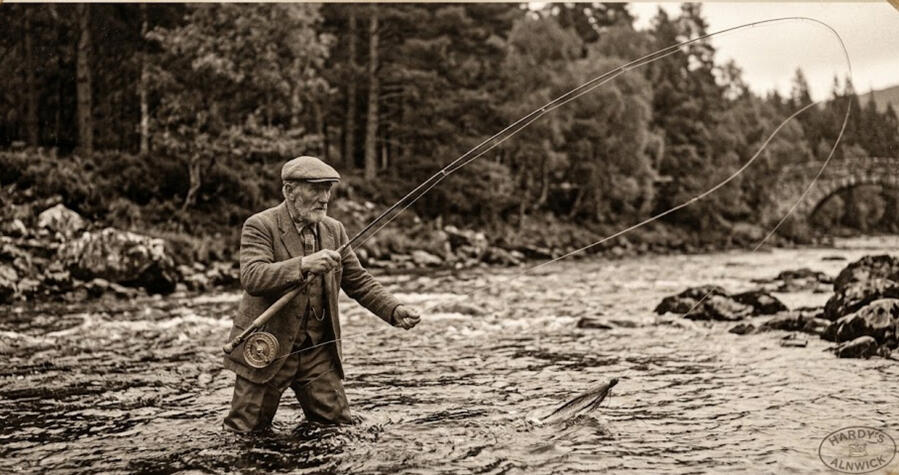
OverviewSpey casting is one of the most influential developments in the history of fly fishing. What began as a practical solution on Scotland's salmon rivers evolved into a sophisticated casting system practiced around the world.The history of Spey casting is not simply a history of rods and lines. It is a history of solving problems:
• limited backcast space
• large rivers
• powerful fish
• casting efficiency
• distance
• line controlEvery major advancement in Spey casting emerged from the need to overcome environmental constraints while improving casting performance. Over two centuries, innovations in materials, mechanics, and line design transformed Spey casting from a regional salmon-fishing technique into a globally recognized casting system.Spey Timeline
Early 1800s
Waterborne casting methods emerge on Scotland's rivers to overcome limited backcast space.1850
Edward Fitzgibbon documents the "Spey or Welsh Throw" in The Book of the Salmon, providing one of the earliest written references to the technique.1860s-1890s
Spey methods spread throughout Scottish salmon fishing and become increasingly refined.1895
Alexander Grant sets a casting record of 65 yards with his famous Grant Vibration rod. The record stands for approximately 110 years.Early 1900s
Split bamboo replaces Greenheart as a primary rod-building material.Mid-1900s
Fiberglass rods begin replacing bamboo.1970s
Graphite revolutionizes rod construction, dramatically reducing weight while increasing performance.1980s-2000s
Skagit and Scandinavian line systems reshape modern Spey casting.Present
Spey casting is practiced worldwide for salmon, steelhead, trout, sea trout, surf species, and numerous other fisheries.The River Spey: The Original Problem
Spey casting originated on Scotland's River Spey.
The river presented anglers with a unique challenge:
• wide, fast water
• powerful Atlantic salmon
• steep banks
• overhanging vegetation
• limited room for traditional backcasts
The overhead cast was often impractical.Scottish anglers responded by creating a system that used water tension rather than aerial backcasting to load the rod. This innovation became the foundation of Spey casting.The First Spey Rods
The original Spey rods were immense.
Typical lengths ranged from:
• 18 feet
• 20 feet
• 22 feet
These rods were constructed from Greenheart, a dense hardwood imported from South America. Greenheart provided tremendous strength and durability but produced extremely heavy rods by modern standards.Because of their weight and length, these rods required:
• slow casting rhythms
• long casting strokes
• large D-loops
• significant physical effort
The mechanics of classical Spey casting were shaped directly by Greenheart's properties.The Early Authors
Edward Fitzgibbon ("Ephemera")
In 1850, Fitzgibbon recorded one of the earliest references to the Spey cast in The Book of the Salmon. While he did not provide a detailed instructional method, his work confirms that Spey-style casting was already established by the mid-nineteenth century.Francis Francis
Francis Francis attempted one of the first detailed mechanical descriptions of Spey casting.
He explained techniques used when:
• rocks prevented a backcast
• steep banks prevented a backcast
• trees prevented a backcast
The problems he described are remarkably similar to those Spey casting solves today.George Kelson
Kelson's 1895 publication:
The Salmon Fly
remains one of the most influential works in salmon-fishing literature.
Kelson documented:
• salmon tackle
• casting methods
• rod design
• Spey-specific equipment
His writings provide a critical historical bridge between traditional salmon rods and the emergence of specialized Spey rods.Eric Taverner
Taverner's Salmon Fishing preserved much of the earlier Spey tradition.
He recognized the difficulty of describing Spey casting in writing and helped document the evolution of classic British casting methods.Alexander Grant: The Wizard of the Ness
No historical figure is more closely associated with the advancement of Spey casting than:
Alexander Grant (1856-1942)
Known as:
• The Wizard of the Ness
• Sandy Batten
Grant was:
• caster
• rod designer
• fly tier
• tackle maker
• violin maker
His understanding of vibration and resonance influenced his approach to rod construction.The Grant Vibration Rod
Grant's most famous innovation was the:
Grant Vibration Rod
Rather than simply building a stronger rod, Grant sought to optimize how energy moved through the blank.
His rods used:
• Greenheart construction
• overlapping lap joints
• leather bindings
• vibration-matching principles
The goal was uniform energy transfer throughout the rod's length. Modern rod designers continue to pursue similar objectives through graphite taper design and material engineering.The 65-Yard Record
In 1895, Grant achieved a cast of:
65 yards (195 feet)
This feat was accomplished with a 21-foot rod and remained unsurpassed for approximately 110 years. Many historians regard Grant as the greatest Spey caster of the nineteenth century.The Bamboo Era
During the late nineteenth and early twentieth centuries, split bamboo began replacing Greenheart.
Advantages included:
• reduced weight
• improved responsiveness
• smoother casting characteristics
Bamboo rods offered greater refinement while letting anglers maintain the distance and fish-fighting ability required for salmon fishing.Fiberglass and the Transition Period
Fiberglass emerged during the mid-twentieth century.
Compared to bamboo:
• lighter
• more durable
• more flexible
Fiberglass represented an important transitional material that helped prepare anglers for the graphite revolution that followed.The Graphite Revolution
The introduction of graphite in the 1970s transformed Spey casting.
Graphite rods were:
• lighter
• stronger
• faster
• more efficient
Most importantly, graphite allowed Spey rods to become dramatically shorter without sacrificing performance. Rod lengths gradually contracted from historical lengths exceeding 18 feet to the 12–14-foot range commonly seen today.
This shift fundamentally altered casting mechanics.Distance increasingly came from:
• line speed
• efficient tapers
• energy transfer
rather than sheer rod length.Traditional Spey
For much of Spey history, anglers used long-belly fly lines.
Characteristics:
• integrated running line
• head lengths exceeding 50 feet
• smooth presentation
• exceptional line control
Traditional Spey remains the most historically authentic form of Spey casting.Scandinavian Innovation
Scandinavian anglers adapted Spey methods for their own fisheries.
The result became known as:
Scandi Casting
Scandi systems emphasize:
• finesse
• presentation
• line speed
• floating lines
• smaller flies
Influential figures such as Göran Andersson advanced underhand casting methods that helped define modern Scandinavian technique.The Skagit Revolution
The Pacific Northwest followed a very different evolution.
Pioneers such as Ed Ward and the Olympic Peninsula Skagit community developed systems capable of casting:
• heavy sink tips
• large flies
• confined casting corridorsThe result was:
Skagit Casting
Characteristics:
• short heads
• concentrated mass
• sustained-anchor techniques
• powerful turnover
Skagit casting fundamentally changed modern steelhead fishing.The Emergence of the Switch Rod
A modern development in Spey casting has been the switch rod.
Generally:
• 10.5 to 11.5 feet
• one- or two-handed use
• adaptable across multiple environments
Switch rods represent the continuing effort to make Spey mechanics applicable to a wider variety of fisheries.Spey Casting Beyond Salmon
Modern Spey casting extends far beyond Atlantic salmon rivers.
Today it is used for:
• Atlantic salmon
• steelhead
• trout
• sea trout
• shad
• surf fishing
• estuary fishing
• stillwater fishing
The mechanics developed on the River Spey have proven adaptable across a broad range of environments.Legacy
The history of Spey casting is a history of adaptation.
Greenheart gave way to bamboo.
Bamboo gave way to fiberglass.
Fiberglass gave way to graphite.
Long-belly lines evolved into Scandi and Skagit systems.Yet the core challenge remains unchanged:
How can an angler efficiently deliver a fly when conventional backcasting is restricted?
The answer developed on the River Spey still influences anglers worldwide.From Scottish salmon rivers to modern steelhead fisheries, from estuaries to coastal shorelines, Spey casting remains one of angling's most elegant examples of mechanical problem-solving.
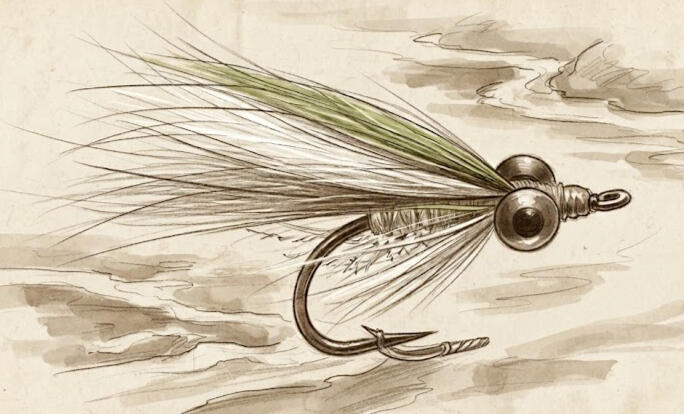
WHAT THE ORIGINAL SPEY CASTERS ACTUALLY DIDReconstructing the Lost Mechanics of Early Spey CastingOverview
Modern Spey casting is often taught through a collection of named casts:
• Single Spey
• Double Spey
• Snap-T
• Snake Roll
• Circle SpeyThe problem is that many of these names emerged long after Spey casting itself was established.
When nineteenth-century salmon anglers stood along Scottish rivers, they were not selecting casts from a modern instructional catalog. They were solving practical fishing problems.To understand original Spey casting, you must forget modern classifications and examine what early anglers actually did with their rods, lines, and water.The evidence suggests that original Spey casters thought far less about named casts and far more about moving line efficiently, maintaining tension, and repositioning a fly without a backcast.The Problem They Were Solving
The original Spey caster faced a simple challenge.
The line was downstream.
The fly was fishing.
The next cast needed to be made.
But behind the angler were often:
• steep banks
• rocks
• brush
• trees
• obstacles
The overhead cast was frequently unavailable.The question was not:
Which cast should I perform?
The question was:
How do I get the line moving again?
The earliest Spey techniques solved this problem.They Lifted The Line
The first step appears repeatedly in historical descriptions.
The angler lifted the line from the water.This was not a violent motion.
It was a controlled rise of the rod designed to free most of the line from surface resistance.
The objective was simple:
• reduce drag
• create mobility
• prepare the line for repositioning
Before anything else could happen, the line had to be freed.They Repositioned The Line
After lifting the line, the angler moved it.
This was the heart of early Spey casting.
The line was not thrown behind the caster.
Instead, it was repositioned around the caster.
Historical descriptions frequently refer to:
• switching
• turning the line
• repositioning the fly
• bringing the line around
The line was essentially rolled into a new orientation that allowed a forward cast.This repositioning process appears to predate much of the modern terminology.They Let The Water Help
The most revolutionary idea in early Spey casting was not rod design.
It was the use of water.Instead of treating water resistance as an obstacle, Spey anglers used it as part of the cast.A small section of line remained connected to the water.
This created:
• resistance
• tension
• directional stability
The water became part of the casting system.
Without that retained connection, many of the original casts would not have functioned.They Rolled The Line
One of the most overlooked elements of early Spey casting is the roll cast.Many historical descriptions suggest that original Spey casters frequently used rolling motions to reposition significant lengths of line.
Rather than aggressive aerial movements, the line often rolled across the water's surface into a new casting position.
Modern anglers sometimes assume the roll cast and Spey cast are separate concepts.
Historically, they were closely related.Many early Spey methods appear to have evolved directly from increasingly sophisticated forms of waterborne line rolling.The Original D-Loop Was A Consequence
Modern anglers often focus on creating a D-loop.Early anglers appear to have focused on moving line correctly.
The D-loop emerged as a consequence.
When line was:
• lifted
• redirected
• repositioned
• tensioned
a D-shaped structure naturally formed behind the rod.The D-loop was not necessarily the objective.
It was evidence that the line had been organized properly.
This is a subtle but important shift in perspective.They Carried Large Amounts Of Line
Modern shooting-head systems encourage repeated stripping and shooting.Original Spey casters worked differently.
Long integrated lines encouraged anglers to keep substantial amounts of line outside the rod tip for extended periods.
This created several advantages:
• fewer pickups
• fewer false casts
• greater fishing efficiency
• continuous readiness
The line remained alive throughout the fishing process.Rather than rebuilding the cast from scratch every time, the angler managed a continuously operating system.They Fished More Than They Cast
One surprising difference between original and modern practice involves priorities.Many modern casters become focused on casting performance.
Original Spey anglers were focused on fishing.The cast existed for one purpose:
To place the fly back into productive water.
The system evolved to reduce wasted motion.Every movement was intended to return the fly to the river as efficiently as possible.
The objective was not demonstration.
The objective was presentation.They Worked With Momentum
Original Spey casting appears to have relied heavily on momentum management.The line was allowed to:
• move
• swing
• reposition
• develop energy gradually
Abrupt acceleration was generally undesirable.
The rod, line, and water worked together as a continuous system.The cast succeeded when momentum remained unbroken.
This contrasts sharply with some modern techniques that emphasize aggressive rod loading through compact power application.The Cast Was Probably Not Standardized
One of the most important conclusions from the historical record is that original Spey casting was likely less standardized than modern instruction suggests.Different anglers likely:
• lifted differently
• repositioned differently
• swept differently
• timed differently
What united them was not identical mechanics.What united them was a common objective:
• maintain tension
• avoid a backcast
• reposition the fly
• deliver the line efficiently
The cast itself may have varied considerably from one river and one angler to another.Before Casts Had Names
Today anglers often ask:
• Single Spey or Double Spey?
• Snap-T or Snake Roll?
• Skagit or Scandi?
The original Spey caster would likely have found the question unusual.The focus was not on selecting from a catalog of named techniques.
The focus was on making the line go where it needed to go.Many of the named casts recognized today can be viewed as later attempts to categorize, teach, and standardize movements that originally developed through practical experience rather than formal instruction.What The Original Spey Casters Really Did
When the historical descriptions are stripped of later terminology, the picture becomes surprisingly simple.Original Spey casters:
• lifted line from the water
• rolled line into a new position
• maintained tension
• used water resistance
• redirected the fly
• formed a D-loop naturally
• delivered the line forward
The process was fluid rather than formulaic.It was a system of line management, not a collection of named casts.Legacy
The original Spey caster did not perform a modern Single Spey, Double Spey, Snap-T, or Snake Roll the way those casts are commonly taught today.Instead, early anglers appear to have practiced a flexible system built around:
• lifting
• rolling
• switching
• tension management
• directional control
Modern Spey casting evolved from those foundations.Long before casts were named, categorized, certified, and diagrammed, Scottish salmon anglers had already discovered the central insight that still defines Spey casting today:
The line does not need to travel behind the angler to travel far in front of the angler.
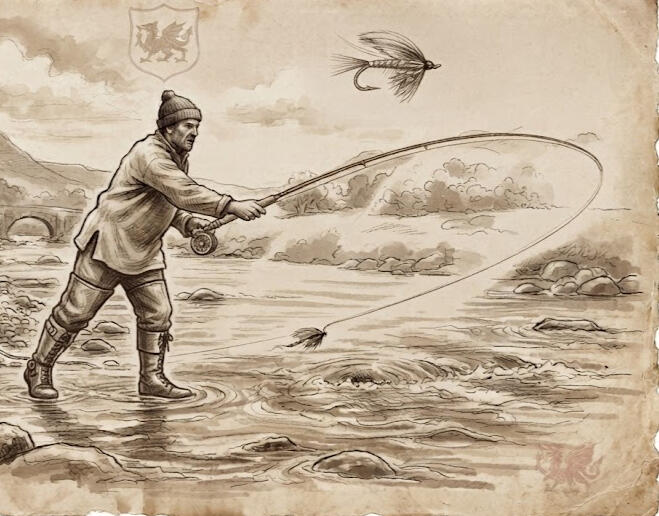
THE WELSH THROW
What the Original Documents RevealIntroduction
The Welsh Throw is one of the oldest documented waterborne fly-casting methods in Britain.Although frequently mentioned alongside the Spey Cast, the Welsh Throw remains poorly understood. Most modern discussions focus on what the cast may have become, rather than what the earliest writers actually described.This article takes a different approach.
Rather than interpreting the Welsh Throw through modern Spey casting systems, it examines the surviving historical descriptions and asks a simple question:
What do the original sources actually tell us?The Earliest Reference
One of the earliest written references appears in 1850 when Edward Fitzgibbon, writing under the pen name "Ephemera," referred to:
"the Spey or Welsh throw"
This brief phrase is historically important.By 1850, the Welsh Throw was clearly established enough that readers were expected to recognize it. Equally important, Fitzgibbon discussed the Welsh Throw and the Spey Throw together, suggesting that anglers of the period recognized similarities between the two methods.The statement does not tell us how the cast worked.
It does tell us that the Welsh Throw was already part of the fly-fishing vocabulary of the day.The Most Revealing Observation
Fitzgibbon also noted that in the Spey or Welsh Throw:
"the fly is first to touch the water"
At first glance, this appears insignificant.In reality, it may be one of the most important surviving descriptions of early waterborne casting.The statement reveals that contact with the water was intentional.
The angler was not merely allowing the fly to touch the water.
The cast itself centered on water contact.This immediately distinguishes the Welsh Throw from a conventional overhead cast.In the Welsh Throw, the water was part of the casting system.The Forgotten Fly Line
One of the most fascinating features of the Welsh Throw has little to do with the cast itself.
It involves the fly line. An early description describes a line that gradually increased in weight along much of its length, with the heaviest section near the rod.The heavier rear section helped propel the lighter front section during delivery.This is remarkable because the concept closely resembles the operating principle behind modern weight-forward fly lines.Long before modern fly-line engineering, anglers had already recognized that mass distribution within the line could improve casting performance.The Welsh Throw was therefore not only a casting method.
It was part of an integrated casting system involving rod, line, water, and technique.Francis Francis Attempts To Explain The Cast
A few years later, Francis Francis attempted something far more difficult.
He tried to explain how to perform the cast.
According to Francis, the cast was used:
"when there are high banks or rocks at the angler's back"
This statement identifies the problem the cast was designed to solve.The Welsh Throw was not originally a distance cast.
It solved a restricted casting environment.
The angler lacked room for a conventional backcast and needed another way to move the line.The Most Important Sentence
Among all of Francis's descriptions, one sentence stands out:
"he does not send the fly back over the shoulder"This single statement may be the clearest surviving explanation of the Welsh Throw.
The cast focused on avoiding the backcast.
The angler did not throw the line behind them.
Instead, the line was repositioned, organized, and redirected while remaining largely in front of the caster.More than a century later, that concept remains a defining characteristic of anchor-based casting.What The Sources Suggest
If Fitzgibbon and Francis are read together, a general sequence begins to emerge.
The angler appears to have:
• lifted the line
• drawn the fly inward
• allowed the fly to touch the water
• used water contact to establish control
• delivered the cast forwardWhat is striking is the absence of any discussion of named casts.
The early descriptions focus on line handling rather than cast classification.The emphasis is on solving a problem, not performing a technique.Evidence Of Switching
Another recurring term in early writing is:
Switching
Multiple historical descriptions connect the Welsh Throw with what writers called switching.The exact meaning varied, but the term appears to describe the act of moving or redirecting the line into a position from which a forward cast could be made.This is an important observation.
The historical language suggests that early anglers may have viewed the cast primarily as a method of line repositioning.The objective was not to perform a specific cast.
The objective was to put the line where it needed to be.Did The Welsh Throw Use A D-Loop?
This question remains open to interpretation.
Modern researchers have suggested that the Welsh Throw may have involved an early D-loop structure created during the repositioning phase of the cast.The historical writers themselves never used modern D-loop terminology.What they do describe is a line that was:
• redirected
• tensioned
• organized
before the final forward delivery.
Whether nineteenth-century anglers would have recognized that shape as a D-loop is impossible to know.
What we can say is that the cast appears to rely on geometry and tension that resemble the foundations of later Spey casting.What The Documents Do Not Say
Equally revealing is what the early writers never discuss.The sources contain no references to:
• Single Spey
• Double Spey
• Snap-T
• Snake RollInstead, they discuss:
• touching water
• avoiding the backcast
• switching
• repositioning
• delivering the line
The focus is practical.
The language is functional.
The objective is fishing, not cast classification.Reconstructing The Welsh Throw
Based solely upon the historical evidence, a probable reconstruction looks something like this:
Step 1
Lift the line from the water.
Step 2
Draw the fly and line inward rather than behind the body.
Step 3
Allow the fly to regain controlled contact with the water.
Step 4
Use that contact to organize and redirect the line.
Step 5
Deliver the cast forward.This reconstruction is not a modern casting instruction.
It is simply the closest interpretation supported by the surviving descriptions.Why The Welsh Throw Matters
The Welsh Throw provides one of the clearest surviving windows into the earliest era of waterborne fly casting.It reveals anglers experimenting with:
• water tension
• line repositioning
• controlled redirection
• backcast-free delivery
long before modern casting systems became standardized.It reminds us that many of the concepts now associated with Spey casting emerged from practical solutions to practical problems.A Note On TerminologyOne challenge in studying early fly-casting literature is that nineteenth-century writers did not always separate casting methods into the distinct categories familiar to modern anglers.Historical authors frequently discussed:
switching
the Welsh Throw
the Spey Throwas closely related concepts. Eric Taverner noted that earlier writers often referred to "switching" or the Welsh or Spey throw when discussing these methods, illustrating how interconnected the terminology could be.This can make the historical record difficult to interpret. Modern anglers often look for precise definitions and clear distinctions between casts, while nineteenth-century writers were generally focused on describing practical solutions to fishing problems.Understanding this context helps explain why the Welsh Throw, Spey Throw, and switching repeatedly appear together throughout the early literature. Rather than representing rigidly separate casting categories, these terms may have described closely related methods for repositioning line and delivering a fly when a conventional backcast was unavailable.Conclusion
The Welsh Throw should not be viewed merely as an obscure historical cast.It offers rare documentary evidence showing how early anglers approached casting before modern Spey terminology existed.The surviving descriptions suggest a method built around:
• lifting
• switching
• water contact
• line control
• forward delivery
More importantly, they reveal a way of thinking.The Welsh Throw was not about selecting a cast from a catalog.
It was about reorganizing the line efficiently when a conventional backcast was impossible.In that sense, the Welsh Throw remains one of the earliest documented examples of a principle that still shapes anchor-based casting today:
The water itself can become part of the cast.
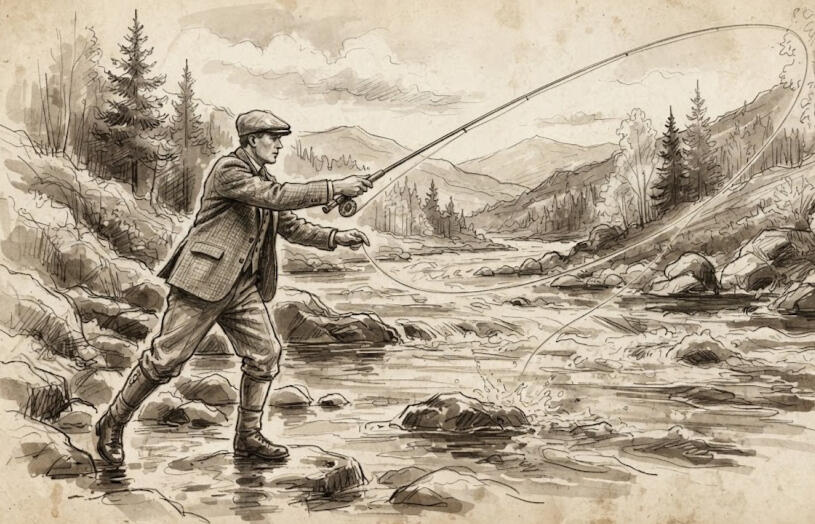
SWITCHINGThe Forgotten Language of Early Spey CastingOverview
Among the many terms found in early fly-fishing literature, few are more intriguing than:
SwitchingToday, Spey anglers discuss:
• Single Spey
• Double Spey
• Snake Roll
• Snap-T
• Skagit
• ScandiYet nineteenth-century writers often referred instead to switching, particularly when discussing the Welsh Throw, Spey Throw, and other methods used where conventional backcasts were impossible.The question is simple:
What did early anglers mean when they spoke of switching?
The answer may reveal more about the origins of Spey casting than any modern catalog of named casts.A Word Older Than Modern Spey
One surprising discovery is that the term "switch casting" appears in documented use long before modern switch rods became popular. Historical discussions trace the term to at least the late nineteenth century, including references from 1888 describing casts in which the flies did not travel behind the caster.This raises an important point.
Switching is not a modern invention.
The word has deep roots within fly-casting history.The Language Of Working Anglers
Modern casting instruction tends to use highly defined terminology.
A cast has:
• a name
• a setup
• a rod path
• a deliveryEarly anglers often used language differently.
Terms such as:
• mending
• stripping
• swinging
originally described actions rather than formally defined techniques.
Switching may have belonged to the same category.Rather than describing a specific cast, it may have described a function.What Was Being Switched?
The answer appears surprisingly straightforward.The angler was switching the line's position.At the end of a fishing swing, the line frequently rested downstream.
Before another presentation, the line needed to move.The challenge was not casting.
The challenge was preparation.
The line had to be transformed from:
Fishing Position
into
Casting Position
That transformation appears to be the essence of switching.A Problem Before A Cast
One feature appears repeatedly throughout early casting literature.
Writers often described a problem before discussing a technique.The problem was usually something like:
• trees
• rocks
• steep banks
• vegetation
• restricted space
The angler needed a way to continue fishing despite those obstacles.Switching seems to have emerged as part of the solution.
The objective was not to perform a cast.The objective was to move the line into a position from which a cast became possible.The Relationship To The Welsh Throw
Historical sources often discuss switching alongside the Welsh Throw. Whether switching referred to a specific cast or a broader line-management function remains unclear, but the association suggests the concepts were closely related.Lift, Switch, Deliver
Modern instruction often breaks casting into:
1. Setup
2. DeliveryEarly descriptions suggest the existence of a forgotten middle phase:
1. Lift
2. Switch
3. DeliverThe switching phase changed the condition of the line.
The line was:
• reorganized
• redirected
• tensioned
• prepared
Only then could the delivery occur.Water Was Part Of The Process
Switching was not purely aerial.
The historical descriptions repeatedly emphasize water contact and line control.
The line remained connected to the river long enough to benefit from:
• resistance
• stability
• directional control
• tension
The angler was not simply moving line through the air.The angler was using the water as part of the repositioning process.
This idea remains fundamental to modern anchor-based casting.Was Switching Originally A Cast?
Perhaps the most interesting question is whether early anglers even considered switching to be a cast.The evidence is far from conclusive.
Historical references often describe switching as something anglers did, but they do not always define it as a specific technique.This raises a fascinating possibility.
Switching may originally have referred not to a cast but to:
• a process
• a transition
• a line-management task
In that interpretation:
• switching was the objective
• delivery was the result
The distinction is subtle but important.What The Word Itself Suggests
The word "switch" is a verb.
It naturally implies:
• changing
• redirecting
• moving from one position to anotherIt does not inherently describe:
• loop shape
• rod path
• casting angle
The language itself supports the idea that switching was more about line movement than a specific cast design.The Mechanics Of Switching
When you compare the historical descriptions, several common themes emerge.Lift
Free the line from much of its surface drag.Redirect
Change the line's orientation.
Maintain Contact
Retain enough water contact to preserve control.Organize
Turn a downstream line into a controlled line.Prepare
Create the conditions required for delivery.
Taken together, these actions describe line management rather than cast selection.Before Casts Had Names
One lesson appears repeatedly throughout early fly-casting history.
Many anglers seem to have been focused on results rather than classifications.Today we often ask:
• Which cast should I use?
• Is this a Single Spey or a Double Spey?
• Is this a Snake Roll?The historical writers frequently seem more concerned with a different question:
How do I get the line where it needs to be?Switching may represent that original mindset.What Switching Reveals About Early Spey Casting
The concept of switching suggests that early Spey casting was likely less standardized than modern instruction.Different anglers undoubtedly:
• lifted differently
• redirected differently
• timed differentlyYet the goal remained unchanged.
The line needed to move from its fishing position into a condition that allowed another presentation.
What mattered was function.
The exact movement was secondary.Lessons For Modern Anglers
Switching offers a useful perspective today.Instead of beginning with:
Which cast should I perform?
an angler might first ask:
Where does the line need to be?That question shifts attention from cast names to line position.
It emphasizes:
• control
• tension
• direction
• preparation
which may have been exactly what early anglers were thinking about.Conclusion
Switching occupies a unique place in the history of Spey casting.
It appears repeatedly in early literature, yet remains poorly defined by modern standards.The surviving evidence suggests that switching was more than a cast.
It was a process.
A method of repositioning line.
A way of preparing for delivery.
A practical solution to the problems created by rivers, banks, trees, and limited casting space.Whether switching was originally viewed as a cast, a movement, or simply a fishing action may never be known with certainty.What is clear is that early anglers understood something fundamental:
Before a line can be cast, it must first be positioned.That idea may be one of the oldest and most important principles in all of Spey casting.
WHAT DID “SPEY” ORIGINALLY MEAN?The River, The Method, and the Evolution of a WordIntroduction
Ask most modern fly anglers where the word Spey comes from and the answer is immediate:
The River Spey in Scotland.
Historically, that answer is almost certainly correct.By the mid-nineteenth century, writers were already referring to the Spey Throw, the Spey Cast, and methods associated with anglers fishing the River Spey. Fitzgibbon's famous 1850 reference to the "Spey or Welsh throw" demonstrates that the term was already established in fly-fishing literature.But a more interesting question receives far less attention:
What did "Spey" actually mean to the anglers who used the word?
The answer may be more complex than simply naming a technique after a river.The Traditional Explanation
The traditional explanation is straightforward.
The River Spey was one of Scotland's great salmon rivers.
It was known for:
• broad pools
• powerful currents
• steep banks
• difficult casting positionsAnglers developed methods that allowed them to fish effectively when conventional backcasts were impossible.Those methods became associated with the river.The name followed.
In this sense, Spey was originally a geographical label.
It identified a river and, by extension, the angling practices associated with it.A Clue Hidden In The Historical RecordThe historical literature contains an important clue about how nineteenth-century anglers understood these methods.In a footnote, Francis Francis observed:
"This cast is called by various names; sometimes 'the Welsh or Spey cast', or according to the name of some other river where it is practiced."This observation is significant.
First, it suggests that anglers recognized the method was not confined to the River Spey.
Second, it shows that similar techniques were practiced on multiple rivers and often acquired local names.Most importantly, it suggests that "Spey" may originally have functioned less as a technical definition and more as a regional label for a broader class of waterborne casting methods.The problem was not unique to the River Spey.
Anglers on many rivers faced:
• restricted backcasts
• steep banks
• trees
• brush
• obstacles
The solutions seem remarkably similar.Before Spey Became A Cast
Modern anglers often think of Spey as a cast.
Examples include:
• Single Spey
• Double Spey
• Circle Spey
• Snake RollYet the earliest writers rarely discussed these distinctions.
Instead, they described:
• restricted backcasts
• line repositioning
• water contact
• deliveryThe focus was practical rather than taxonomic.
When reading nineteenth-century descriptions, it is often difficult to determine whether Spey referred to:
• a cast
• a throw
• a method
• a style of fishing
The boundaries were far less rigid than they are today.Spey As A Solution
One way to view the term is through the problem it solved.
Across many British salmon rivers, anglers faced similar challenges:
• trees
• rocks
• brush
• steep banks
• limited room behind the casterThe solution was to:
• use water contact
• reposition the line
• avoid the conventional backcast
• deliver the line efficiently
This common thread appears repeatedly throughout the early literature.Viewed from this perspective, Spey begins to look less like a particular cast and more like a system for solving a recurring fishing problem.The Spey Throw
Another clue lies in the language itself.
Early writers frequently referred to the:
• Spey Throw
• Welsh Throw
rather than the modern Spey Cast.
This distinction may matter.A throw may have implied an entire operation involving:
• line recovery
• line repositioning
• water contact
• forward delivery
rather than merely the final casting stroke.If so, Spey may originally have described a broader method rather than a narrowly defined cast.Spey And Switching
Historical discussions regularly connect:
• Spey
• switching
• Welsh Throw
with one another.Eric Taverner later referred to "switching," or the Welsh or Spey throw, when discussing earlier descriptions of the method.This repeated association suggests that Spey may have been understood as a collection of related line-management practices rather than a single isolated movement.The common objective remained the same:
Move the line from a fishing position into a castable position and deliver it without a traditional backcast.Why The Name Survived
If similar techniques existed elsewhere, why did the name Spey survive?The most likely answer is that the River Spey became the place most strongly associated with the method.
The name became famous.
The principles spread.Eventually Spey became the dominant label, even though similar methods were apparently known on other rivers as well.This is not unusual.
History is filled with ideas that become identified with the place where they became most famous rather than the place where they were exclusively practiced.The Transition To Modern Terminology
As fly-casting instruction became more systematic during the twentieth century, terminology grew increasingly precise.Writers and instructors began classifying individual movements:
• Single Spey
• Double Spey
• Snake Roll
• Snap-TSpey gradually transformed from a broad descriptive term into a category of casts.
The language became more technical.
The movements became more standardized.
The original meaning may have become narrower as a result.Was Spey A Place Or A Philosophy?
This may be the most interesting question of all.
Clearly the name originated from the River Spey.
The historical evidence strongly supports that conclusion.
What remains less certain is whether early anglers understood Spey merely as a cast performed on that river.The surviving descriptions suggest something broader.
They point toward an approach built around:
• waterborne casting
• line repositioning
• tension management
• efficient deliveryThose principles could be applied anywhere similar conditions existed.In that sense, the River Spey may have supplied the name, but the underlying ideas were portable.What The Word Reveals
The evolution of the word Spey mirrors the evolution of fly casting itself.Originally, it may have identified:
• a river
• a regional method
• a practical solutionOver time, it became:
• a casting style
• a family of casts
• a recognized discipline
The name remained the same.
The meaning expanded.
Then gradually became more specialized.Conclusion
The word Spey almost certainly originated with the River Spey in Scotland. The historical record leaves little doubt.What is less clear is what nineteenth-century anglers meant when they used the term.The earliest descriptions focus less on named casts and more on practical solutions:
• avoiding a backcast
• repositioning a line
• using water tension
• delivering efficientlyFrancis Francis's observation that the "Welsh or Spey cast" could be known by different names on different rivers suggests that anglers may have viewed these methods as broader than any single location.For that reason, Spey may originally have meant more than a cast.It may have described an entire approach to line management and waterborne fly delivery.The River Spey gave Spey casting its name.
The challenges faced on that river may have given it its philosophy.
And long before casts were categorized, standardized, and named, anglers were already applying those principles wherever rivers forced them to answer the same question:How do you deliver a fly when there is nowhere to cast behind you?
WHAT DID "THROW" MEAN?Rethinking Early Spey TerminologyIntroduction
Modern fly anglers speak of:
• casts
• casting strokes
• casting techniquesYet nineteenth-century fly-fishing literature often used a different word:
Throw
Historical writers referred to:
• throwing a fly
• the Welsh Throw
• the Spey Throw
far more often than modern anglers realize.At first glance, the difference appears trivial.
We simply assume that "throw" was the Victorian equivalent of "cast."
But was it?Historical evidence suggests the word may have carried a broader meaning than modern anglers typically assume.A Different Vocabulary
In early angling literature, the physical act of propelling a line and fly was commonly described as a "throw" rather than a cast.This language appeared throughout nineteenth-century writing, long before modern fly-casting terminology became standardized.Today, the word "cast" tends to imply:
• a specific movement
• a specific technique
• a discrete action
The word "throw" may have implied something broader.It may have described the entire process of preparing and delivering the line.The Welsh Throw
One of the most famous examples survives in the name:Welsh Throw
The name itself raises an interesting question.
If this movement was merely a cast, why wasn't it simply called the Welsh Cast?
Historical writers consistently used "throw."That choice of language may reveal something about how anglers understood the movement.
Rather than describing a single stroke, the Welsh Throw appears to have involved:
• recovering line
• repositioning line
• restoring water contact
• organizing tension
• delivering the line forwardIn other words, it may have been an entire maneuver rather than a single casting action.Throwing A Fly
Victorian writers frequently referred to:
throwing a fly
rather than:
casting a fly
This wording feels unusual to modern readers.Yet it reflects a more literal description of what anglers believed they were doing.
The rod acted as a lever.
The line carried the fly.
The angler threw the fly toward the desired location.Only later did fly casting become analyzed in terms of:
• loops
• rod loading
• energy transfer
• casting mechanics
As those concepts developed, the word "cast" gradually became dominant.Throw Versus Cast
To modern ears, these terms sound interchangeable.
Historically, the distinction may have mattered more.A cast often implies:
the delivery itself
A throw may have implied:
the complete operation
This distinction becomes important when examining early descriptions of Spey-style methods.What Francis Francis Actually Described
When Francis Francis attempted to explain the Welsh or Spey throw, he did not merely describe a forward cast.Instead, he described a sequence:
• lift the line
• draw the fly inward
• allow the fly to touch the water
• establish control
• send the line forward
The "throw" appears to encompass the entire process.This differs sharply from the modern tendency to isolate the final delivery stroke from everything that precedes it.Throw And Switching
One of the most intriguing aspects of early Spey terminology is the close relationship between:
• switching
• the Welsh Throw
• the Spey ThrowHistorical writers frequently treated these concepts as closely related rather than as sharply separated categories.This raises an interesting possibility.
Perhaps the early sequence looked something like:
Switch The Line
Reposition it.
Restore its geometry.
Re-establish tension.
Throw The Line
Deliver it.Under this interpretation, switching and throwing become complementary actions rather than separate casts.A Functional Way Of Thinking
Modern anglers often organize casts by name.
Examples include:
• Single Spey
• Double Spey
• Snake Roll
• Snap-T
The historical writers often seem less concerned with classification.Their descriptions focus on:
• what the line is doing
• where the line is positioned
• how the water is being used
• how the fly is delivered
The vocabulary is practical rather than taxonomic.Why The Term Matters
Examining the word "throw" helps us avoid reading modern concepts back into nineteenth-century texts.
When a historical writer refers to a Spey Throw, they may not be describing what modern anglers would recognize as a neatly defined Spey cast.Instead, they may be describing an entire method of:
• repositioning
• organizing
• tensioning
• delivering
the line.
This changes how we interpret many historical descriptions.From Throw To Cast
Over time, angling language evolved.
As fly fishing became more technical and instructional literature became more detailed, terminology grew increasingly precise.Writers began discussing:
• rod loading
• loop formation
• taper design
• casting mechanicsThe language gradually shifted from:
Throw
to
CastThis linguistic change mirrors the broader evolution of fly fishing from a practical field skill into a more formally analyzed discipline.What The Language Reveals
The word "throw" may reveal something important about how early Spey anglers thought.
They may not have separated:
• repositioning
• water contact
• tension creation
• delivery
into distinct mechanical phases.
Instead, they may have viewed all of these actions as part of a single operation.The throw was not necessarily the final stroke.The throw may have been the entire maneuver.Conclusion
The word "throw" appears throughout early fly-fishing literature, yet modern anglers rarely stop to consider what it meant.
While it is tempting to treat "throw" as a simple archaic synonym for "cast," the historical descriptions suggest a richer possibility.The Welsh Throw and Spey Throw may have described complete systems of line management rather than isolated casting strokes.Historical writers frequently focused on:
• line position
• water contact
• switching
• redirection
• delivery
rather than on named casts and formal classifications.Whether anyone can ever prove the distinction conclusively is uncertain.
What is clear is that early Spey casting language often emphasized function over terminology.Long before casts were categorized and standardized, anglers were already switching, throwing, and solving practical fishing problems.That may be the most important lesson the word "throw" still has to teach us.